Table of Contents
ToggleA 6×8 bathroom might feel tight, but it’s far from impossible to work with. In fact, many homeowners find that smaller spaces force smarter design choices, resulting in bathrooms that feel more functional and intentional than their larger counterparts. Whether you’re renovating an existing bathroom or planning one from scratch, understanding how to position fixtures, maximize storage, and choose the right layout can transform those 48 square feet into a space that works harder than you’d expect. The key is knowing which layouts have proven track records and how to apply them to your specific situation.
Key Takeaways
- A 6×8 bathroom layout delivers roughly 3 feet of clear floor space once fixtures are installed, requiring smart positioning and adherence to local building codes like the 21-inch toilet clearance rule.
- The galley-style layout lines fixtures along opposite walls for efficient traffic flow, while the angular layout spreads fixtures around corners for added visual breathing room in your 6×8 bathroom.
- Pocket doors or barn doors are smarter choices than hinged doors that swing inward, as they preserve precious square footage in compact spaces.
- A 24–30 inch vanity with drawers, combined with vertical storage solutions like floating shelves and recessed medicine cabinets, maximizes storage without consuming floor space.
- Large-format tiles (12×24 inches or larger) and light, glossy finishes make a 6×8 bathroom feel more spacious, while a recessed shower niche eliminates clutter and saves real estate during daily use.
Understanding Your 6×8 Bathroom Dimensions
A 6×8 bathroom measures 48 square feet, roughly the size of a large closet. Before you start picking fixtures or paint colors, you need to understand what those dimensions actually mean in physical space.
Your 6-foot width and 8-foot length give you roughly 3 feet of clear floor space once a toilet, vanity, and shower are installed. That’s tight, but manageable. The real constraint isn’t the floor: it’s how fixtures interact with each other and whether doors swing inward or outward.
Start by measuring your actual space and accounting for obstacles: existing windows, ductwork, plumbing stacks, and load-bearing walls all affect where you can place fixtures. Codes also matter. Most jurisdictions require a minimum of 21 inches of clear space in front of a toilet and at least 30 inches of width to access a sink comfortably. Check your local building code or IRC (International Residential Code) if you’re pulling permits.
Don’t forget door swing. A hinged door swinging inward eats precious square footage: a pocket door or barn door is often the smarter choice in tight bathrooms. If you can’t install one, make sure your door swing doesn’t block access to the toilet or shower.
Essential Fixtures And Fixture Placement
Every 6×8 bathroom needs three things: a toilet, a sink, and some form of shower or bathing. How you arrange them separates a functional bathroom from one that feels cramped and awkward.
Toilet, Sink, And Shower Configuration
The toilet is your anchor. It’s the hardest fixture to move because plumbing rough-ins are expensive to relocate. If you’re not replumbing, work around where the toilet is now. Position it on the wall opposite your entry door if possible, this makes it less obvious when the door opens.
Your sink typically goes on the wall adjacent to the toilet. A 24-30 inch vanity is standard: anything narrower feels cramped for storage and cleaning. If floor space is truly limited, a wall-mounted or pedestal sink works, but you lose storage and counter space. That trade-off stings in a 6×8 bathroom.
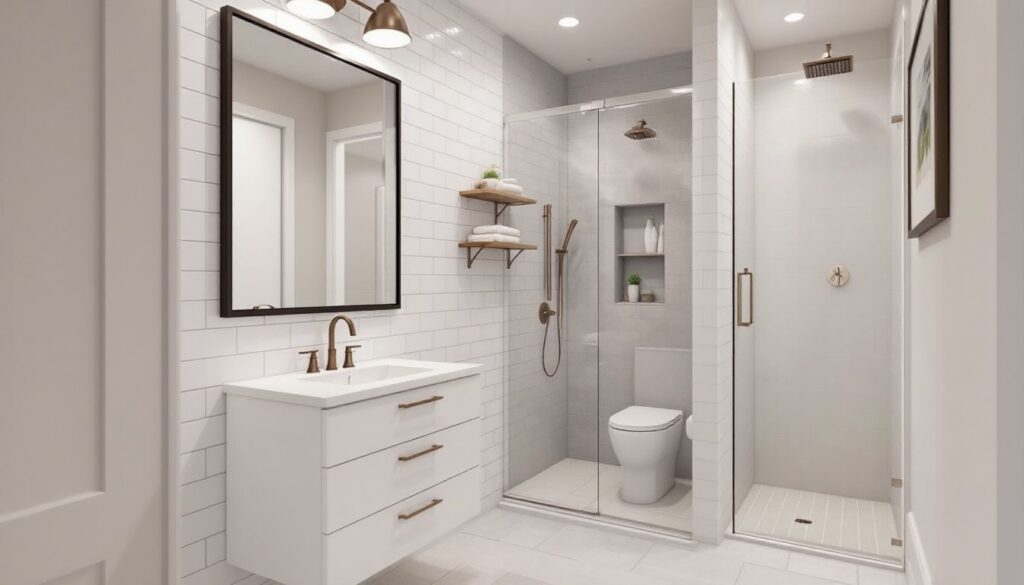
The shower is the space hog. A standard 60×30-inch alcove shower fits snugly against one long wall. If you absolutely need a bathtub, a 60×30-inch soaking tub is the minimum: it takes up similar footprint to a shower but offers flexibility. Frameless glass or a minimal shower enclosure makes the space feel larger than a fully framed unit with solid walls.
Mirror and lighting are critical. A large mirror opposite your shower makes the room feel twice its size. Position your light fixture above or beside the vanity to minimize shadows and glare.
Popular 6×8 Layout Options
Two layouts dominate compact bathrooms: the galley and the angular. Both work: which one fits depends on your fixture positions and what you’re trying to achieve.
The Galley-Style Layout
The galley layout lines fixtures along opposite walls, creating a “railroad car” effect. One long wall holds the shower, the opposite wall holds the toilet and sink side by side. This works beautifully when your 6-foot dimension is your width.
Pros: It’s efficient and feels natural to move through. Traffic flows in one direction without awkward angles. Plumbing runs are straightforward if the toilet and sink share the same wall.
Cons: If your sink and toilet are squeezed together, elbows touch when both are in use. Homeowners exploring bathroom layouts in forums often mention this exact complaint. This setup also requires your shower to be across from your toilet, which some find uncomfortable from a privacy or psychological standpoint.
The Angular Layout
The angular layout spreads fixtures around corners, creating an L-shape or three-point triangle. For example: toilet in one corner, sink on an adjacent wall, and shower on a third wall. This breaks up the visual monotony and can feel more spacious.
Pros: Fixtures don’t feel stacked on each other. You gain a bit of visual breathing room. If plumbing allows, this avoids the awkward toilet-and-sink squeeze.
Cons: The layout wastes corner space (corners are dead zones in bathrooms) and requires careful door placement to avoid blocking access between zones. Interior design inspiration sites like Homify showcase these layouts well: browsing examples before committing to a layout saves heartburn during construction.
Maximizing Storage And Space Efficiency
Storage makes or breaks a compact bathroom. Without it, even a well-designed 6×8 bathroom feels cluttered and smaller than it is.
Choose a vanity with drawers, not open shelving. A 24-30 inch vanity with at least two drawers gives you buried storage for toiletries, medications, and hair tools. If you can’t fit a vanity, a wall-mounted cabinet or recessed medicine cabinet above the toilet is your fallback. Recessed cabinets save 4-6 inches of depth compared to surface-mounted ones, that matters in a 6-foot-wide room.
Wall space is your hidden inventory. Install a shelf above the toilet (affordable and effective), floating shelves above the vanity, or corner shelves next to the shower. These add function without eating floor space. Avoid too many shelves though: too much stuff visible makes a small space feel chaotic.
Tile and finishes affect perceived space. Large-format tiles (12×24 or bigger) feel less busy than small tiles and make the room appear more spacious. Light colors and glossy finishes reflect light and open things up. Dark walls close in a compact space, even if they look sophisticated.
A shower niche (a recessed shelf built into the shower wall) replaces the need for a caddy cluttering your alcove. If you’re tile work is sound, a 12×12 or 12×24-inch niche costs little during construction but saves real estate during use.
Small spaces benefit from home improvement guides covering storage hacks and space-saving strategies. These resources help you think outside the typical bathroom fixture box and find creative solutions tailored to your specific layout.