Table of Contents
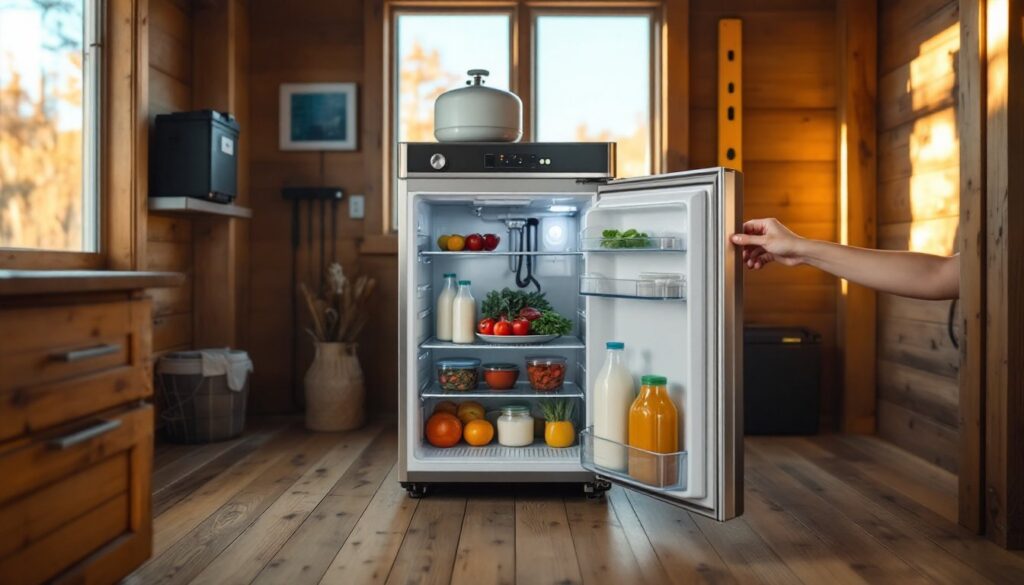
ToggleAn absorption refrigerator operates silently in an RV, cabin, or off-grid home without a compressor, the traditional workhorse that makes standard fridges hum. If you’re building a retreat space, retrofitting a camper, or looking for backup cooling that runs on propane or solar power, an absorption refrigerator is worth serious consideration. Unlike conventional units that cycle a compressor on and off, absorption refrigerators use heat and a chemical cycle to move cold from one chamber to another. They’re not new technology: they’ve been trusted in RVs and marine applications for decades. This guide walks through how they work, where they shine, and what you need to know before installing one.
Key Takeaways
- An absorption refrigerator operates silently without a compressor, using heat and a chemical cycle to cool—making it ideal for bedrooms, cabins, and RVs where noise matters.
- Absorption fridges run on multiple energy sources including propane, electricity, or solar power, offering significant cost savings in off-grid homes compared to conventional compressor models.
- While absorption units excel in hot climates and high-altitude locations, they require strict leveling (within 1 degree), take 4–8 hours to cool, and need proper ventilation to maintain peak performance.
- Regular maintenance—including annual level checks, condenser coil cleaning every 6–12 months, and drain system flushing—keeps an absorption refrigerator running efficiently for 15–20 years or longer.
- An absorption refrigerator is best suited as a supplemental cooling appliance for specific applications like guest suites or off-grid homes rather than a replacement for full-size kitchen refrigerators.
What Is an Absorption Refrigerator and How Does It Work
An absorption refrigerator has no moving compressor. Instead, it relies on a heat source, propane, electricity, or even kerosene, to drive a chemical process that cools the cabinet. The core cycle involves a refrigerant, an absorbent liquid (usually lithium bromide or ammonia-water solution), an evaporator, an absorber, a generator, and a condenser working in concert.
Heat applied to the generator boils the refrigerant from the absorbent. The refrigerant vapor rises into the condenser, where it cools and liquefies, then flows to the evaporator inside the fridge cabinet. As the liquid refrigerant evaporates in the evaporator coils, it absorbs heat from the interior, cooling the food compartment. The now-vapor refrigerant returns to the absorber, where it’s recaptured by the absorbent liquid, completing the cycle.
Because there’s no mechanical pump or compressor, absorption units run nearly silent. They’re ideal for spaces where noise matters, sleeping cabins, bedrooms in off-grid homes, or quiet RV retreats. The trade-off is that they cool more slowly than compressor-driven models and use more energy per degree of cooling. The unit also needs to be level (within about 1 degree) to function properly: tilt beyond that and the internal liquid distribution breaks down, and cooling stops.
Key Advantages for Homeowners and DIY Enthusiasts
Silent operation is the headline benefit. If you’re installing a small fridge in a master bedroom addition, a cabin guest room, or a quiet workspace, an absorption unit won’t wake anyone or create ambient noise fatigue. There’s no compressor cycling on and off, no refrigerant line vibration, nothing.
Absorption fridges run on multiple energy sources. Most models operate on 120-volt AC power, propane, or a combination of both. Some models can switch between sources automatically or manually, offering flexibility for homes that use solar panels during the day and propane heat at night. This adaptability makes them popular in off-grid and hybrid power setups.
They’re also built tough and simple. With fewer moving parts, there’s less that can fail. A well-maintained absorption fridge lasts 15–20 years or longer. This simplicity appeals to DIY owners in remote locations where calling a service technician isn’t practical. Parts are durable, and routine maintenance is straightforward (more on that below).
Finally, absorption units perform well in hot climates and high-altitude locations where standard compressor fridges struggle. Because the cooling cycle isn’t dependent on mechanical efficiency ratios that vary with ambient conditions, they maintain consistent performance even when it’s 95 degrees outside or you’re at 8,000 feet elevation.
Absorption vs. Conventional Refrigerators: What’s the Difference
Energy Source and Operating Costs
Conventional refrigerators rely on a compressor, an electrically driven pump that pressurizes refrigerant, forcing it through coils to exchange heat. They demand continuous 120-volt or 240-volt AC power and cycle on and off depending on interior temperature. A typical kitchen fridge draws 150–800 watts when running, though the average duty cycle means actual daily consumption is 3–6 kilowatt-hours.
Absorption units draw far less power when running on their heat source. A propane-electric absorption fridge might pull only 40–60 watts when running on propane heat, cutting electricity demand to a fraction of a compressor fridge’s load. But, if running on electricity alone, absorption units consume 600–1,200 watts, more than a compressor fridge, because heating the generator is thermodynamically less efficient than mechanical compression. The advantage emerges when propane is available: propane heat is cheap in rural areas, and propane supply isn’t subject to grid outages.
Operating costs depend on your energy mix. If you’re grid-connected with standard utility rates and no propane access, a conventional fridge wins on cost. In an off-grid home with solar panels and a propane tank, an absorption fridge may be cheaper to run and more reliable during cloudy stretches.
Noise Levels and Performance
Absorption fridges operate near silence: typically 30–40 decibels, similar to a quiet office or soft conversation. Compressor fridges range from 35–50 decibels, with compressor cycling audible throughout the day. For a bedroom installation, that difference is significant.
Cooling speed and temperature consistency favor conventional fridges. A compressor-driven fridge reaches set temperature in 1–2 hours and maintains it precisely via automatic cycling. An absorption fridge takes 4–8 hours to stabilize and doesn’t rebound as quickly if the door stays open on a hot day. But, both keep food safe at 40 degrees Fahrenheit or below. For most home use, the slower cool-down is not a deal-breaker: it’s just something to plan for (don’t expect an absorption fridge to chill a fresh batch of groceries in an hour on a hot afternoon).
Absorption units also require strict leveling. Tilt more than 1–2 degrees and cooling can stop or degrade significantly. Conventional fridges tolerate modest unlevel placement without issue.
Ideal Applications and Where to Install One
Absorption refrigerators excel in specific niches. An off-grid cabin with propane heating and solar power is a textbook use case. The fridge runs on propane during winter and cloudy weeks, then switches to solar-charged batteries in summer. You’ve got years of quiet, uninterrupted cooling without grid dependence.
RVs and boats have long relied on absorption technology because they can run on 12-volt propane or shore power without the engine running. A camper parked for the season doesn’t need the generator idling just to keep milk cold.
Guest suites and bedroom additions benefit from silent operation. If you’re finishing a basement bedroom or adding a kitchenette to a master suite expansion, an absorption unit won’t disturb sleep. This is where newer units shine: models like Dometic and Norcold brands offer compact, efficient designs in 2–3 cubic-foot capacities, smaller than a full kitchen fridge but plenty for drinks and leftovers.
Retirement homes and ADUs (accessory dwelling units) for aging parents also see growing adoption. The silent operation, reliability, and lower maintenance needs appeal to older homeowners or caretakers managing multi-unit properties.
Do NOT install an absorption fridge in a tilted space (a sloped A-frame loft or an uneven crawl space). Do NOT rely solely on electricity in regions with frequent power outages unless you also have adequate backup battery. And do NOT assume an absorption fridge will replace a full-size kitchen model: they’re supplemental units for remote, specific, or low-noise applications. For comparison, take a look at smart refrigerators for modern kitchens if you’re planning a main-space appliance upgrade.
Maintenance Tips to Keep Your Unit Running Efficiently
Most absorption fridge maintenance is prevention. Keep the unit level using a 4-foot spirit level and shim blocks underneath if necessary. Check levelness every year or after any structural movement. A single degree of tilt doesn’t mean failure, but 2+ degrees will degrade cooling noticeably.
Ventilation is critical. Absorption units generate heat during operation (especially the condenser section), so they need clear airflow. Install yours with at least 2–3 inches of clearance on all sides, especially the back where the condenser is. In an RV or tight cabinet, ensure a vent or fan prevents hot-air recirculation. Poor ventilation causes the condenser to overheat and the fridge to lose cooling capacity or shut down entirely.
Clean the condenser coils every 6–12 months with a soft brush or vacuum. Dust buildup insulates the coils, forcing the unit to work harder and use more energy. In dusty environments (farms, desert builds, workshops), clean every 3 months.
If your unit runs on propane, inspect the line and burner assembly annually. Look for cracks in the window or signs of uneven flame. A blue flame indicates proper combustion: yellow or orange suggests incomplete burn, which wastes fuel and lowers cooling efficiency. Have the burner serviced by a propane technician if anything looks off.
For units using lithium bromide solution, check the sealed system for weeping or corrosion around joints. These aren’t field-serviceable: if you spot active leaks, the unit needs professional refurbishment or replacement. Avoid moving or storing an absorption fridge on its side: this can damage the internal absorbent solution distribution.
Flush the drain system every 12 months. A small amount of water drains from the condenser, and blockages lead to water pooling inside the cabinet. Run water through the drain valve (consult your manual for location) to ensure it flows freely. For detailed energy efficiency and maintenance strategies across all cooling appliances, resources like Fine Homebuilding offer advanced guidance on building science and appliance integration in energy-efficient homes.
For remote installations, keep spare fuses, a replacement thermostat switch, and the manufacturer contact number on hand. Most failures are repairable with simple parts if you’re handy: others require factory service. Knowing what’s under warranty and how to contact support matters more in an off-grid setting than in a suburban kitchen.