Table of Contents
ToggleIndoor gnats are one of those small annoyances that can spiral into a major problem fast. One day you’ve got a couple of flies hovering near your potted fiddle leaf fig, and two weeks later you’re swatting at them every time you walk past the plant stand. These tiny pests thrive in moist soil and warm indoor environments, making houseplants the perfect breeding ground. Unlike mosquitoes or fruit flies, fungus gnats are attracted to the damp conditions beneath the soil surface, where they lay hundreds of eggs. The good news? You don’t need harsh chemicals or professional fumigation to reclaim your indoor garden. With the right gnat killer, whether natural, commercial, or DIY, you can eliminate the problem at its source and keep your plants healthy in the process.
Key Takeaways
- The best gnat killer targets both soil larvae and adult gnats, with options ranging from natural remedies like cinnamon and neem oil to commercial insecticides and sticky traps.
- Overwatering is the root cause of gnat infestations; letting the top 1–2 inches of soil dry between waterings eliminates the moist conditions gnats need to breed.
- Physical barriers such as sand, diatomaceous earth, or plastic wrap interrupt the gnat lifecycle by preventing adults from reaching soil to lay eggs.
- Natural solutions like hydrogen peroxide soil drench and cinnamon work well for light to moderate infestations but require consistent weekly application over 3–4 weeks.
- Professional pest control is worth considering if an infestation persists after 4–6 weeks of DIY treatment or affects multiple rooms.
Understanding Your Gnat Problem
Before reaching for any gnat killer, it helps to know what you’re dealing with. Most indoor plant gnats are fungus gnats (Sciaridae family), not common fruit flies. They’re tiny, about 1/8 inch long, with long legs and segmented bodies that look almost mosquito-like under magnification.
The lifecycle is where the real trouble starts. Adult gnats lay eggs in the top inch of potting soil, and larvae hatch within 3–4 days. Those larvae feed on decaying organic matter and root fungi in the soil for about two weeks before pupating and emerging as adults. This cycle repeats every 3–4 weeks, which means a small infestation can explode quickly if left unchecked.
The root cause is almost always overwatering. Gnats need consistently moist soil to reproduce: let your plants dry out between waterings and you’ve already won half the battle. Check the soil with your finger, if the top inch is wet, you’re creating the perfect breeding zone. Poor drainage, compacted soil, and excess organic matter also contribute. Once you understand these conditions, you can target the problem at multiple points in the gnat lifecycle instead of just swatting adults.
Natural Gnat Killer Solutions
If you prefer to avoid chemicals, several natural options work well for light to moderate infestations.
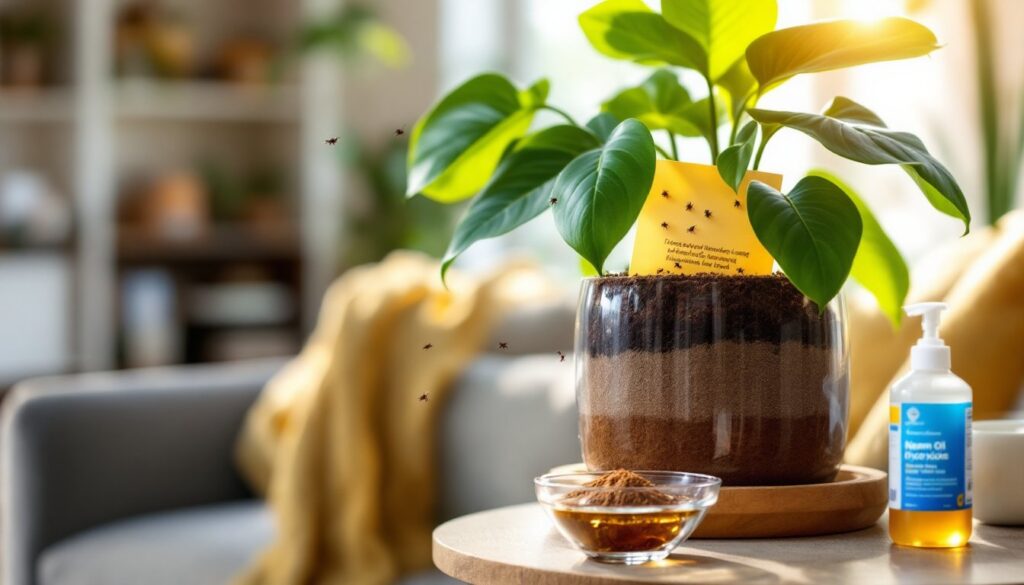
Cinnamon is one of the simplest remedies. Sprinkle ground cinnamon (the kind from your spice rack) directly on top of the soil, pressing it gently into the top half inch. Cinnamon is antifungal and acts as a mild repellent: it won’t kill larvae already in the soil but will discourage egg-laying. Reapply every week or two.
Neem oil is a cold-pressed extract from neem tree seeds and works on multiple pests and fungi. Mix according to label directions (typically 1–2 tablespoons per gallon of water) and spray the soil surface and the base of the plant every 5–7 days. It’s less toxic than synthetic pesticides but still requires basic PPE, wear gloves and avoid breathing the mist. Neem can take 2–3 weeks to show results since it targets larvae and disrupts egg development.
Sand or diatomaceous earth creates a physical barrier. Lay a 1/2-inch layer of coarse sand or food-grade diatomaceous earth on top of the soil. This interrupts the gnat lifecycle by preventing adults from reaching the soil to lay eggs and by damaging soft larvae. According to gardening guides from The Spruce, this is especially effective for houseplants that don’t require frequent soil disturbance. Refresh the layer every couple of weeks or after watering.
Hydrogen peroxide soil drench kills larvae directly. Mix one part 3% hydrogen peroxide with four parts water and pour the solution through the soil until it drains from the bottom. This oxidizes the soil environment and kills developing larvae without harming roots. Repeat once a week for three weeks to catch multiple generations.
Chemical and Commercial Options
For severe infestations or fast results, commercial gnat killers offer more aggressive action.
Insecticidal soaps containing pyrethrin (a natural compound derived from chrysanthemum flowers) or spinosad are effective against adult gnats. These products disrupt the nervous system of flying adults but have little residual effect on soil larvae. Spray directly onto affected plants and repeat every 5–7 days. Always wear safety glasses and gloves: spray in a well-ventilated area or outdoors if possible.
Systemic insecticides like those containing imidacloprid are absorbed by plant roots and distributed throughout the tissue, poisoning gnats that feed on the plant. These are stronger than topical sprays and provide longer protection (often 4–6 weeks per application). But, they’re more hazardous and may not be appropriate for edible herbs or vegetables. Read the label carefully, some products restrict use on food crops. Wear gloves and avoid inhaling spray mist.
Fungicide drenches target the fungi and organic matter that feed developing larvae. Products containing beneficial microbes or sulfur-based fungicides reduce the food source for larvae, effectively starving them. These work best when combined with reduced watering.
Most commercial products require multiple applications (usually 3–4 weeks apart) to break the gnat cycle. Don’t expect overnight results: larvae in the soil won’t die immediately, so you’ll still see adults emerging for 1–2 weeks after your first application.
DIY Gnat Traps and Barriers
Traps won’t eliminate an infestation alone, but they’re excellent for monitoring and reducing adult populations while other solutions take effect.
Yellow sticky traps are the simplest option. These are small cards coated with a non-drying adhesive that attracts flying insects. Place them near affected plants at soil level or slightly above. Gnats get stuck as they pass by. Replace traps every 5–7 days or when they’re covered with insects. They’re harmless to humans and pets, though not aesthetically pleasing. Expect to catch dozens within the first few days if you have an active infestation.
Apple cider vinegar traps work on both fungus gnats and fruit flies. Fill a shallow dish with equal parts apple cider vinegar and water, then add a drop of dish soap (the soap breaks surface tension so gnats sink rather than fly away). Place near the plants. This trap works best for monitoring because it won’t penetrate the soil where larvae live. Change the liquid every 3–4 days.
Gnat vacuum traps use a fan to draw flying insects into a collection chamber. These are pricier ($20–$50) but effective for managing airborne adults without chemicals. They’re quiet enough for living spaces and reusable. Combine with soil treatments for comprehensive control.
DIY barriers also help. Cover soil with a 1/2-inch layer of coarse sand, which prevents gnats from accessing the moist layer beneath. Alternatively, use clear plastic wrap directly on top of the soil (poke small holes if needed for watering). These barriers disrupt the breeding cycle by preventing egg-laying.
Prevention Tips to Keep Gnats Away
Once you’ve eliminated the current infestation, prevention is far easier than cure.
Watering practices are the single most important factor. Let the top 1–2 inches of soil dry out between waterings. Stick your finger into the soil: if it feels moist, wait another day or two. Reduce watering frequency in winter when plants grow slower. Use a watering can with a long spout to direct water at the base of the plant, not the foliage, wet leaves also invite fungal issues.
Soil choice matters. Use quality potting soil with good drainage rather than garden soil, which compacts and retains moisture. Premium potting mixes contain bark, perlite, and other materials that prevent compaction and allow excess water to drain quickly. Repot plants every 12–18 months to refresh the soil and remove accumulated organic matter that feeds larvae.
Improve air circulation. Gnats thrive in stagnant, humid air. Place a small fan nearby (not directly on the plant) to keep air moving. This also helps soil dry faster between waterings. Open windows on mild days to reduce indoor humidity.
Clean up fallen leaves and debris. Dead leaves on the soil surface are food for gnat larvae. Remove any that have dropped, and don’t pile mulch thickly on top of the soil. A thin layer is fine: thick mulch stays perpetually moist.
Quarantine new plants. Inspect nursery plants for gnats before bringing them home. Place new purchases in a separate area for a week or two and monitor for signs of infestation. Many infestations originate from purchased plants. Resources like Gardenista offer guidance on plant care and pest prevention after bringing plants indoors.
When to Call in Professional Help
Most gnat problems are DIY-manageable, but certain situations warrant professional intervention.
If you’ve tried multiple methods over 4–6 weeks and gnats persist, a pest control professional can assess whether the problem is truly gnats or a different pest requiring different treatment. They also have access to stronger commercial-grade products and can identify hidden breeding sites you might miss.
If the infestation is severe enough to damage plants or spread to multiple rooms, professional treatment becomes more cost-effective than ongoing DIY attempts. A single treatment often costs $200–$500 depending on your location and property size, but saves months of frustration.
For apartment dwellers or rental properties, check your lease before applying pesticides. Some require landlord approval or professional treatment only. Calling in a licensed pest control service avoids lease violations.
Finally, if you have immunocompromised household members, young children, or pets with sensitivities, a professional can recommend the safest approach. They understand which products are safe for your specific situation and can apply treatments when the house is temporarily vacated if needed. Design inspiration sites like Southern Living emphasize creating beautiful indoor plant displays, but pest management is equally important for long-term success.
Conclusion
Gnat infestations are frustrating but entirely solvable. Start by reducing soil moisture and applying your chosen gnat killer, whether cinnamon, neem oil, sticky traps, or a commercial product. Consistency matters more than strength: applying a mild solution weekly beats a harsh application that you forget to repeat. Once gnats are gone, stick to proper watering habits and monitor new plants before bringing them indoors. Your houseplants will thrive, and you’ll enjoy them without constant swatting.