Table of Contents
ToggleA modern walk-in shower transforms a bathroom from purely functional to genuinely inviting. Unlike traditional shower stalls with doors and frames, walk-in showers prioritize open, accessible design and clean sightlines. Homeowners increasingly favor this layout because it maximizes small bathrooms, adapts for aging in place, and delivers that spa-like feel without the contractor markup. Whether you’re planning a full remodel or upgrading a dated enclosure, understanding the design fundamentals, fixture options, and budget trade-offs will guide you toward a shower that actually works for your lifestyle and wallet.
Key Takeaways
- A modern walk-in shower features an open-concept design with minimal framing and a curbless threshold that requires proper slope and drainage to prevent water intrusion while creating an accessible, spa-like aesthetic.
- Large-format porcelain tiles (16×24 inches or larger) with high slip-resistance ratings and epoxy grout are essential for durability, easier maintenance, and moisture protection in modern walk-in showers.
- Budget planning for a modern walk-in shower ranges from $3,000–$6,000 for basic functionality to $8,000–$15,000+ for premium features like frameless glass enclosures, body jets, and heated elements.
- Proper plumbing and electrical rough-in—including thermostatic mixing valves, adequate hot-water supply, and GFCI-protected circuits—must comply with building codes like the IRC and NEC before installation.
- A comfortable modern walk-in shower layout requires a minimum of 5×7 feet to accommodate two people and optional features like benches, while layouts as small as 3×4 feet work for single users in tight bathrooms.
- Frameless glass panels, rainfall showerheads, and hand-held wands elevate the design while strategic placement of linear drains and thoughtful tile patterns achieve both visual appeal and functional accessibility.
What Defines a Modern Walk-In Shower
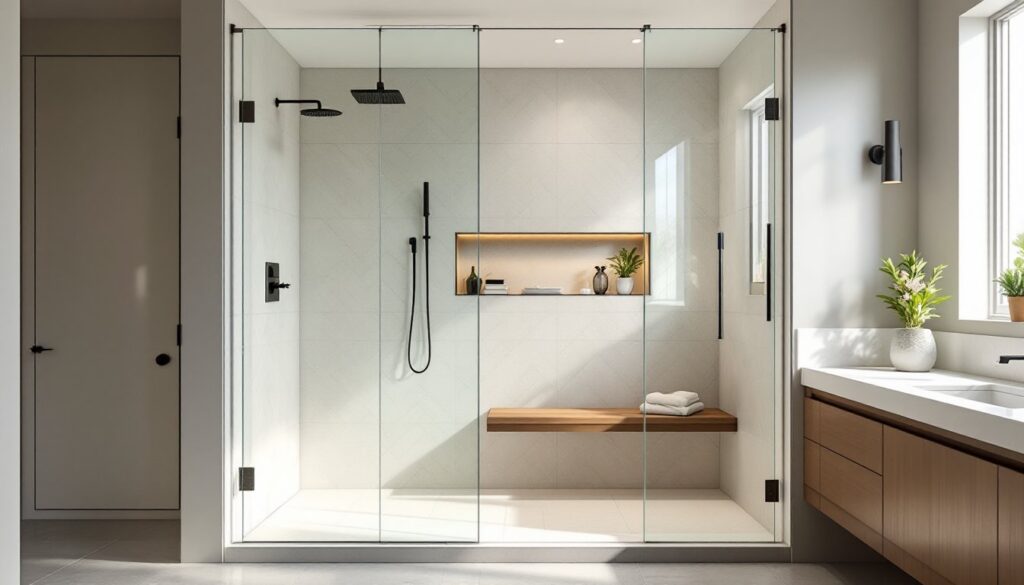
A modern walk-in shower is an open-concept enclosure with minimal or no framing, a low or curbless threshold, and strategic drainage to contain water. The key difference from a traditional shower: there’s no door swinging inward or outward, and the boundary between “wet” and “dry” zones is visually subtle.
Curbless design, where the shower floor sits flush or nearly flush with the surrounding bathroom floor, represents the contemporary gold standard. This approach requires a sloped floor (typically 1/8 inch per running foot) that directs water toward a linear drain or center drain system. Building codes, particularly the International Residential Code (IRC), require proper substrate waterproofing and drainage to prevent water intrusion into substructures.
A half-glass partition or full-height frameless panel may define one side, but the overall aesthetic is open rather than compartmentalized. This style works especially well for smaller bathrooms, a 5×8 footprint feels larger without a framed enclosure, and it’s inherently accessible for elderly adults, wheelchair users, or anyone with mobility concerns.
Key Design Elements of Contemporary Shower Spaces
Frameless Glass Enclosures
Frameless glass panels use 3/8-inch or 1/2-inch tempered glass secured by stainless steel hinges, clips, and hardware rather than aluminum or vinyl frames. The thickness and temper prevent shattering: if breakage occurs, tempered glass crumbles into small, relatively harmless pellets rather than jagged shards. Expect to spend $1,000–$3,500 for a quality frameless enclosure (labor and glass combined), depending on size and custom cuts.
The frameless approach suits open-plan layouts where a visual barrier suffices. A 6-foot-tall panel is standard, though custom heights can run 8–10 feet. Ensure the glass installer uses proper sealing and a squeegee habit, mineral deposits and water spots become visible on frameless glass faster than on framed enclosures.
If budget is tight or you’re renting, a partial glass partition, perhaps 3 to 4 feet tall, achieves the modern look while containing splash and costing significantly less.
Tile Selection and Patterns
Modern walk-in showers favor large-format tiles (16×24 inches or larger) because fewer grout lines equal easier cleaning and a sleek appearance. Porcelain tiles are the go-to: they’re less porous than ceramic, resist mildew better, and handle moisture reliably over decades.
Wall patterns range from minimal (a single tone, floor to ceiling) to dramatic (herringbone, subway in a stacked pattern, or mixed metallics). The shower floor demands high-slip-resistance: look for tiles with a wet coefficient of friction (COF) of 0.60 or higher, or lay down textured matte finishes rather than glossy ones.
Grout matters too. Use epoxy or urethane grout in wet areas instead of cement-based products: they resist mold and moisture penetration. Seal cement grout annually if you do use it. Budget $2–$5 per square foot for tile material alone: installation labor typically runs $8–$15 per square foot depending on pattern complexity and regional rates.
Layout and Space Planning Essentials
Most modern walk-in showers occupy a minimum of 3×4 feet, cramped, but functional. A comfortable layout is 5×7 feet or larger, allowing two people to shower without elbows colliding and providing space for a bench or teak shelf.
Drainage design is non-negotiable. A linear drain (a long, shallow channel drain) positioned near the far wall directs water toward a slope-bottomed floor. Alternatively, a center drain works if you’re willing to slope the entire floor toward the middle. Hire a licensed plumber or contractor experienced in ADA-compliant accessibility, codes vary by jurisdiction, but most require the floor slope to be gentle (1/8 inch per foot maximum) so users don’t feel unsteady.
Before you finalize layout, establish where plumbing and electrical rough-in will run. A modern shower ideally includes a mixing valve rated for 1/2-inch supply lines, adequate hot-water supply (a recirculation pump helps eliminate cold-water delay), and if you’re adding a steam shower or body jets, dedicated 240V electrical for heating elements. All of this must comply with National Electrical Code (NEC) requirements and local permits. Bathrooms typically require GFCI (ground fault circuit interrupter) protection on all outlets and switches within arm’s reach of water sources.
Measure twice and account for wall thickness, existing framing, and ventilation requirements. A bathroom exhaust fan rated for your square footage (typically 50–80 CFM for small bathrooms) must vent outside, not into the attic.
Fixtures and Features That Elevate Your Shower
Modern showers balance aesthetic appeal with genuine utility. A rainfall showerhead (oversized, wall or ceiling-mounted) sets the tone, but it should deliver adequate pressure. Check the GPM (gallons per minute) rating: federal standards cap showerheads at 2.5 GPM, yet some high-end models maintain better flow distribution than others.
Body jets, installed at varying heights along a side wall, create a spa-like experience but add cost ($500–$1,500 for a quality manifold and installation) and require adequate hot-water capacity and pressure.
A hand-held wand (sometimes called a shower bar) is practical for rinsing feet, cleaning the enclosure, or assisting elderly bathers. Wall-mounted soap niches, recessed shelves tiled to match walls, beat floating shelves for moisture control. Built-in teak benches ($200–$600) provide a place to sit and feel intentional rather than an afterthought.
Mixing valve technology matters. A thermostatic or pressure-balancing valve prevents sudden temperature swings when someone flushes a toilet or turns on another faucet. Install it per manufacturer spec during rough-in: retrofitting is expensive. Finally, consider a steam generator or heated mirror defogger if you want a premium touch, these run $500–$2,000 installed but genuinely improve the morning routine.
Budget-Friendly vs. Premium Upgrade Options
Budget-Friendly Approach ($3,000–$6,000 total)
• Semi-frameless glass enclosure or a simple half-panel with brushed nickel hardware
• Mid-range porcelain tile in a single color, field-laid (no complex patterns)
• Standard 2.5 GPM showerhead and basic mixing valve
• Curbless threshold with a linear drain (standard plumbing, no fancy manifolds)
• Painted drywall with basic ventilation fan
• Finish: clean, functional, modern aesthetic
This path works if your existing plumbing and framing are salvageable and you’re comfortable with simpler finishes. Labor is the largest cost: materials are modest.
Premium Upgrade Path ($8,000–$15,000+)
• Full-height frameless glass enclosure with custom cuts or angled panels
• Large-format (24×48 inch) porcelain tile with herringbone or mixed-pattern walls, textured slip-resistant floor
• Dual showerheads, body jets, and a thermostatic mixing valve with digital controls
• Steam generator and heated towel rack
• Luxury-grade fixtures and bespoke design inspiration from high-end collections
• Teak bench, integrated niches, and accent lighting
• Underfloor heating system (if renovating the subfloor)
• Finish: spa-resort quality, highly personalized
This level assumes you’re rewiring and re-plumbing, which often requires permits and licensed contractors. It’s not a DIY-only project for most homeowners.
Middle Ground ($6,000–$8,000)
Frameless or semi-frameless glass, quality porcelain tile in a thoughtful pattern, a reliable rainfall showerhead plus hand-held wand, one or two body jets, and proper accessibility. This delivers modern style without extreme cost or complexity, ideal for homeowners who want impact without reinventing their entire plumbing layout.